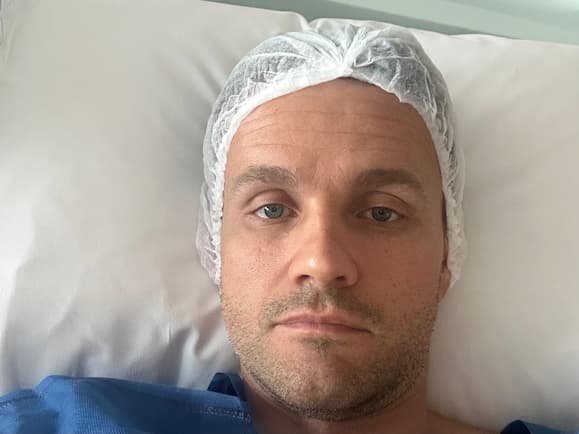
I woke up early at 5:40. Showered with alcohol wipes, shaved my leg, put on the hospital gown and hat, and waited. Everything suddenly felt very procedural, very real. I met the anesthesiologist, answered more questions, listened to clear explanations about what would happen. His calm voice was reassuring in theory. My body was still tense.
At 8:00 they came to get me. Nervous. The operating room looked exactly like you imagine. Bright lights. Machines. People moving with purpose. They adjusted my IV and added more medication. Everyone seemed relaxed. Except me. A nurse held my hand. That helped. A lot. Then I was gone.
I woke up briefly in the observation room and passed out again. Later, I woke up in my hospital bed completely exhausted. No feeling in my legs. Heavy, numb, disconnected. I was told the surgery went well. I got my phone around 12:40 and called my wife, but I could not really talk. My thoughts were slow, words hard to find. All I wanted was yogurt and blueberries. She came.
The ATP Finals were on TV. Watching tennis felt surreal, like watching a different version of my life. More medication. Lunch. Lying there while the day slowly passed. I still could not walk. Could not feel my legs. Could not feel my balls either, which might have been the strangest sensation of all. Slowly, I started moving my toes. The left leg woke up first. The right leg stayed asleep longer.
The plan was to go home at 20:00. Really?
At 18:00 they asked me to pee. I could not. I felt the urge strongly, but nothing happened. Sitting. Standing. Weak. Dizzy. Running water from the sink. Watching YouTube videos of waterfalls. Every time I got close, someone asked, “Are you done?” Back to square one. Then again, almost there. My wife called asking if I wanted anything from the store. Square one again.
Stress started creeping in. They explained that anesthesia can confuse the nervous system and that the signal between brain and bladder sometimes just disappears. Eventually, they put in a catheter. Honestly, I tried, but it was better not to wait too long. In hindsight, I should have done it while the anesthesia was still stronger. They drained 850 ml. It felt like a car getting an oil change, except I was watching TV while a nurse held my dick. Instant relief.
It was 21:00. Now I just needed to pee on my own to be discharged.
We finally left at 1:00 a.m. Tired. Disoriented. In pain. The taxi ride home felt surreal. I felt completely disabled. Everything hurt. Everything felt fragile. At home, I could not find a comfortable position. My body felt foreign, heavy, uncooperative.
Eventually, I fell asleep.
Recovery had officially started.
Key Takeaways
- Surgery itself is only the starting line, not the hardest part
- Loss of control is one of the most challenging aspects of anesthesia
- Calm medical staff can anchor you when anxiety peaks
- Small human gestures, like a nurse holding your hand, matter deeply
- The body wakes up in stages, not all at once
- Anesthesia affects systems you never think about until they fail
- Asking for help early prevents unnecessary suffering
- Discharge does not mean readiness, only permission to leave
- The first night sets the tone for how fragile recovery feels
- Recovery officially begins when the hospital doors close