Woke up feeling much better. No fever. Still a bit tired, but my vitals were clearly improved. That alone lifted a huge weight off my shoulders.
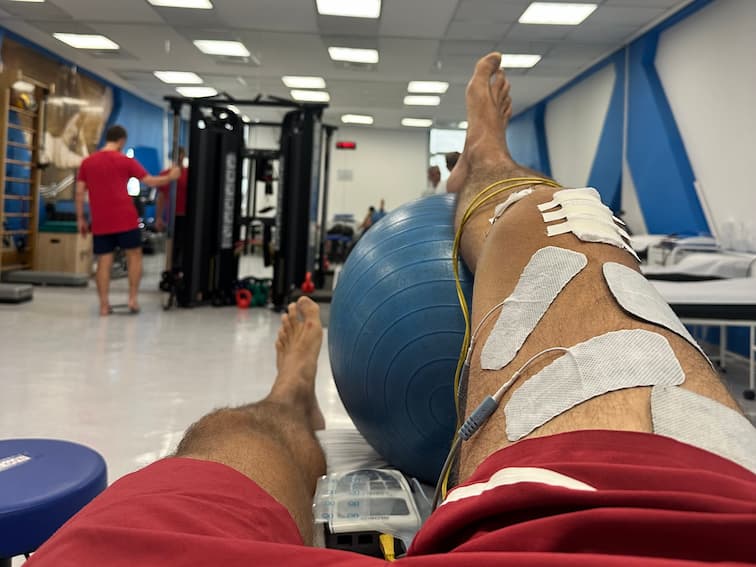
I had a physio session in the morning and we were able to do much more today. Since I started using Game Ready, my knee feels noticeably better - more stable, calmer, and less reactive. I can lift my leg more easily and overall mobility is improving.
Maybe it’s placebo. But if it works, it works.
Later, I went to see my orthopedist. He was very happy with my progress and emphasized one thing above all: consistency. Day-by-day work with physio is what matters most. He also warned me that the hardest phase is usually around one month post-surgery - after that, things tend to get easier.
He removed the stitches. He also aspirated some fluid from the right side of my knee. Painful, but quick, and the knee immediately felt better afterward.
We talked in detail about why the meniscus failed. Five years ago, I partially tore my ACL. The tear was small, so we chose a conservative approach with physio. Over time, that stretched ACL created subtle instability. My knee would occasionally “give way.” Eventually, I built enough muscle to compensate, or so I thought. But every unstable movement placed extra stress on the meniscus. Over years, that caused micro-tears and chronic wear. First came a small tear while playing tennis. Then the final bucket-handle tear happened during something as trivial as cleaning a table.
That’s why fixing only the meniscus was never an option. The ACL had to be addressed.
We also discussed upcoming travel. His recommendations:
- Xarelto - 2 days before and 2 days after travel
- Compression socks - Sigvaris Up 25
- NMES device - during travel
My GP wasn’t convinced the NMES was necessary, but both my physio and orthopedist strongly recommended it. After a bit of research, I bought the Therabody PowerDot 2.0. something I’ll likely use even after recovery.
He also explained why he’s confident there’s no infection: no redness, no abnormal swelling, and the fluid he removed looked normal. The warmth in my knee is expected, it’s part of the inflammatory healing process and can last 2-3 months.
Finally, some milestones:
- Partial weight-bearing - can start around week 3
- Crutches - gradual reduction until around week 6, when they can likely be discontinued
- Pool work - can start in 3-4 days
That felt huge.
Today replaced fear with understanding.
And understanding builds confidence.
Key Takeaways
- Stabilizing health quickly restores confidence and momentum
- Consistent physio work matters more than any single technique
- Reduced swelling and calmness improve overall mobility
- Medical reassurance replaces fear when explanations are clear
- Fluid aspiration can bring immediate functional relief
- Understanding the root cause reframes the entire injury
- Fixing structural instability is essential for long-term durability
- Travel requires proactive medical planning, not improvisation
- Warmth in the knee is a normal part of healing, not a red flag
- Clear milestones transform uncertainty into motivation