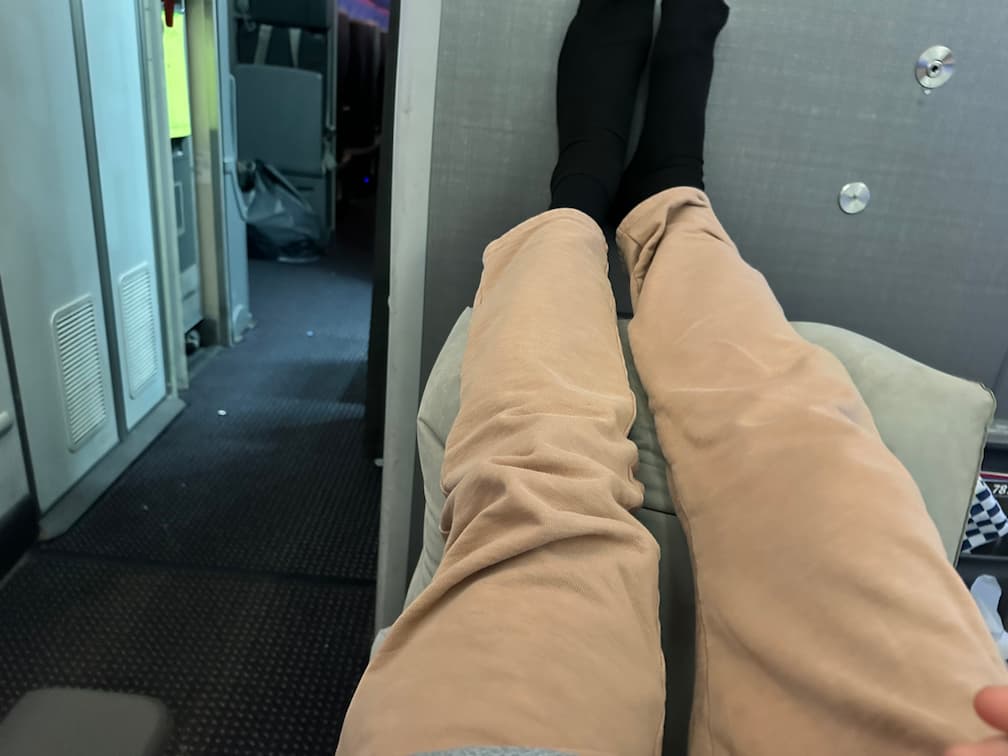
Still traveling. Boarded the plane to São Paulo already exhausted. This time, no alcohol. Not even a movie. I spent most of the flight reading a book about Anthony Kiedis. One story stood out. As a kid, he once missed a pool while jumping from the second floor and almost broke his back. He barely mentioned recovery, which probably means he does not even remember it clearly now. I hope one day this will be the same for me. Something that happened, shaped me, and then quietly faded into the background. Right now, though, it is very real.
I stayed disciplined during the flight. Constant ankle pumping and an almost ridiculous amount of water. I slept a bit, but not nearly enough. I woke up around eight times to go to the bathroom. A personal record, I suppose.
We finally got home. Ice, rest, unpacking. I took off the compression sock and checked the knee. It was swollen, but honestly, it looked better than I expected after such a long journey. That felt like a small win.
I did a few gentle movements but decided to skip physiotherapy today. This was not the day to push. Just rest.
Later, I went to the club with the boys, still using one crutch. I talked with a few friends who have gone through the same surgery. Hearing familiar stories, familiar frustrations, familiar timelines helped more than any protocol. Shared experience carries its own kind of reassurance.
By 20:00, jet lag hit hard. Completely done. I went home and shut down.
The trip is finally over. Recovery is not. But now it continues on home ground.
Key Takeaways
- Long-haul flights are manageable with discipline and preparation
- Swelling can still be controlled even after extreme travel days
- Skipping physio occasionally is part of listening to the body
- Shared recovery stories reduce mental load
- Fatigue accumulates quietly and demands respect
- Being home changes the tone of recovery immediately