Saturday.
I woke up with significant lower-back pain. It is clearly the sleeping position. Being stuck on my back, unable to move freely, is taking its toll. I did not sleep well. I kept tossing and adjusting, trying to change position without moving the leg. It is exhausting.
I started the day with a good breakfast. That helped. Then exercises.
I’ve noticed something important: when I plan my day and put some structure around it, I feel better. Closer to normal. Less lost. And starting the day with exercise makes a real difference.
My morning routine looked like this:
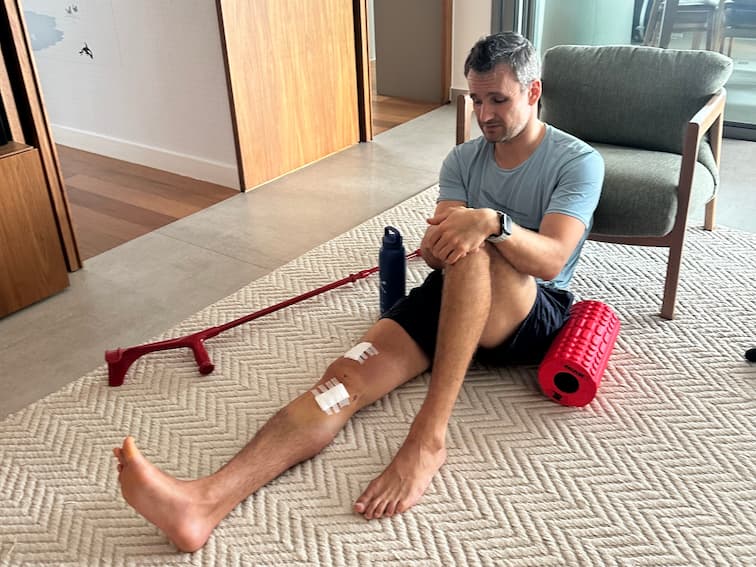
- Stretching - twice for 5 minutes, leg supported on a yoga pillow (or a roller). Let gravity do the work.
- Break - 10 minutes to check the news.
- Ankle pumps - 5 sets of 30 reps, with 30-45 seconds rest.
- Foot pull stretch - pull the foot toward you and hold for 30 seconds.
I also tried some quad activation. It is still extremely weak, barely responding. I decided not to push it yet and wait for proper guidance from my physio.
The whole day was slow.
I stayed home. Played games with my son. Later, board games with the whole family. Read a bit. Rested. In the afternoon, I did the exercises again. That part is starting to feel non-negotiable now.
I thought about going to the gym, just to feel normal again, but decided to wait. There is no need to rush this.
Some days aren’t about progress. They’re about consistency.
Key Takeaways
- Poor sleep and immobility can shift pain to other parts of the body
- Structure and routine reduce restlessness and mental fatigue
- Starting the day with movement improves overall mood
- Gentle, repeatable exercises build a sense of control
- Quad activation should be approached cautiously and with guidance
- Staying home can be restorative when done intentionally
- Consistency matters more than intensity at this stage
- Not every day is about visible progress
- Patience is an active part of recovery