Resistance Bands: Small Tool, Massive Results
In the world of knee recovery, resistance bands are my best friends. They are cheap, portable, and give you the progressive tension you need to wake up sleepy muscles after ACL and meniscus surgery. If you want a tiny “portable gym” you can use at home, at work, or while traveling, this is it.
My Two-Stage Strategy
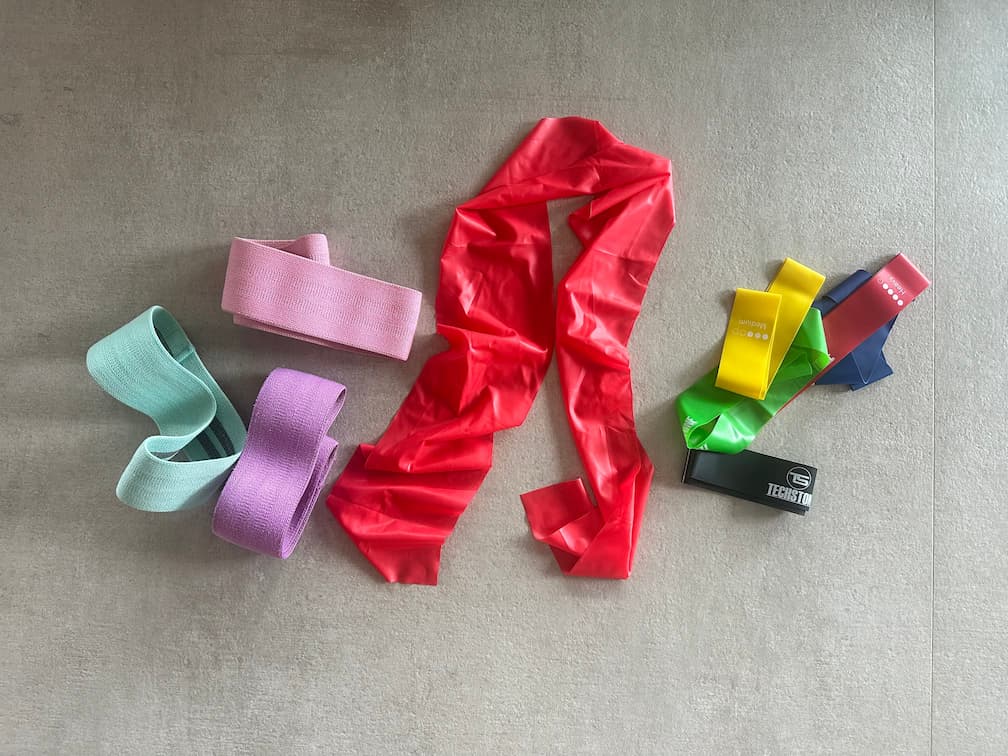
I did not just buy one band and call it a day. I used two distinct types depending on my stage of recovery, because early rehab is about controlled range of motion and activation, and later rehab is about strength, stability, and better mechanics.
The Early Phase: I started with a long, wide, flat band (medium strength). It was perfect for assisted mobility work, gentle stretching, and light upper body pull-aparts while I was still limited. It let me move without yanking on my knee.
The Strength Phase: As I moved into later recovery, I switched to loop / mini bands. Putting these around my ankles or just above the knees for monster walks, glute bridges, and lateral steps was a total game-changer for hip control and quad support, which matters a lot when you start walking more and building confidence again.
If you want examples of how I used them day to day, I keep the movements organized on my Exercises page, and I share the bigger picture of how all of this fit into my rehab on the Timeline.
"Do not hunt for the cheapest set on Amazon. Look for quality and brand reputation. A snapped band in the middle of an exercise is the last thing your surgical knee needs."
Long Wide Flat Bands
Ideal for early ACL rehab, assisted mobility, gentle range of motion work, and upper body training while you are still protecting the knee.
- ✅ Perfect for assisted heel slides and range of motion work
- ✅ Smooth, progressive resistance with minimal joint stress
- ✅ Wide surface makes them easier to grip and control
- 💡 My Tip: Choose medium tension; you can always double it up when it gets too easy.
Loop / Mini Bands
Compact circular bands for glute, hip, and lateral chain strength. This is the “walking confidence” tool once you start loading the leg more.
- ✅ Essential for glute and hip activation that supports knee alignment
- ✅ Ultra-portable, fits in any bag or pocket
- ❌ Cheap rubber loops roll, pinch, and lose tension
- 💡 Recommendation: Go for fabric-lined loops for comfort and consistency.
Resistance Bands for ACL Rehab
Quick answers to the questions I kept Googling during recovery, especially when I needed portable strength work at home or during travel. Not medical advice, always follow your physio.
Are resistance bands good for ACL and meniscus rehab?
+
When can I start using resistance bands after ACL surgery?
+
What is the difference between long flat bands and loop mini bands?
+
Which band resistance level should I buy for knee rehab?
+
Where should I place a loop band for monster walks: ankles or above the knees?
+
Are fabric loop bands better than rubber loop bands?
+
Can resistance bands replace strength training after ACL surgery?
+
What are the best resistance band exercises for quad and glute activation?
+
What should I check to avoid a band snapping during rehab?
+
My Recovery "Pro-Tips"
Buy in Multiples
Bands are small and easy to lose. I bought a few sets and kept them everywhere: my gym bag, the car, and the living room. If you see them, you are more likely to sneak in quick activation work throughout the day. If you want more ideas like this, check all my gear and travel tips.
Quality > Price
Check reviews for snapping, rolling, or losing tension. Brands like Theraband or Blackroll usually feel more consistent. It is worth paying a little more so the band does not fail mid set when you are trying to protect a healing knee.
The "Ankle vs. Knee" Rule
Loop bands around the ankles create more leverage and difficulty. If you feel strain around the surgical joint, move the band up to just above the knees to reduce the lever and keep the movement clean. I list the exact exercises I used on the Exercises page.
Check for Tears
Once a week, stretch your bands out and look for tiny nicks or micro tears. If you see any, throw the band away. These are disposable items, and replacing a band is much cheaper than dealing with a setback.
As an Amazon Associate, I earn from qualifying purchases.