Compression Braces: The Traveling Joint-Saver
By week 4, I was traveling and walking significantly more. While my physio suggested a simple elastic bandage, I quickly realized that a high-quality compression knee sleeve was the key to managing swelling, feeling stable, and staying confident when I was on my feet all day.
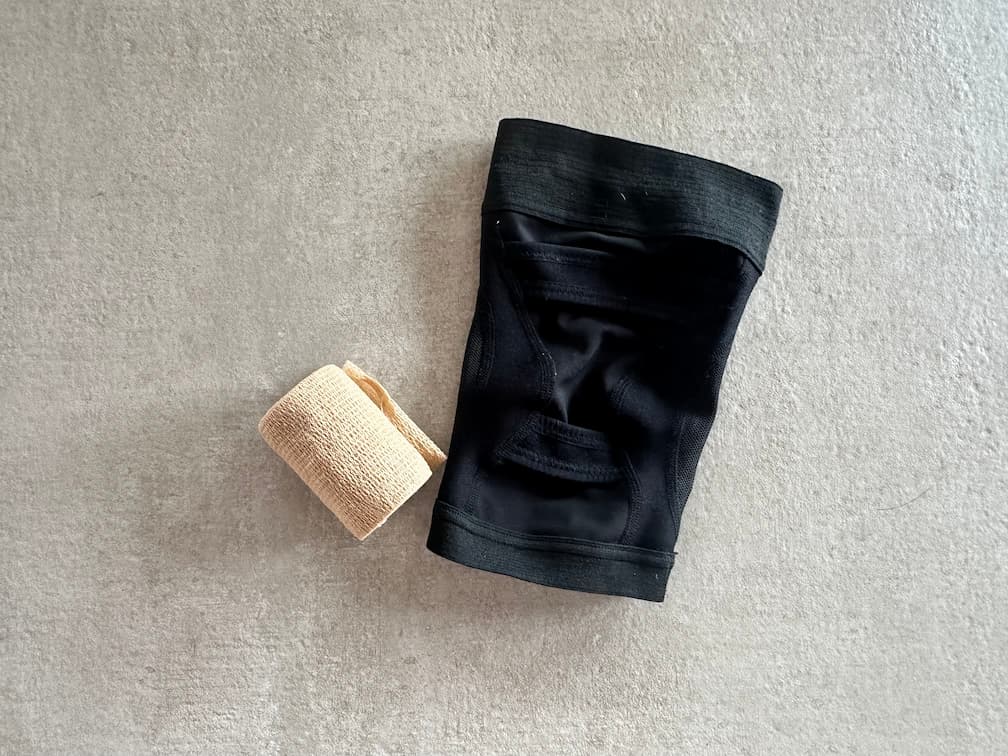
Bandages vs. Precision Engineering
Early on, an elastic bandage can be enough to keep fluid moving around the joint. But once you start clocking miles, navigating airports, or standing in lines, you need something that does not slip, roll, or lose tension halfway through the day.
During my travels, I picked up a Japanese-made compression sleeve. The difference in build quality was night and day compared to standard drugstore sleeves. It provided consistent compression that helped reduce swelling even after a full day of movement.
If you are building your travel kit, this sits right next to the basics like elevation and easy movement work. I keep more gear ideas in Tips, and I track how I ramped up walking and loads on my Timeline.
"A cheap brace is a waste of money. It will lose its snap fast. Invest in quality materials that keep their tension; your knee will feel the difference by the end of the day."
The Future: Bauerfeind
If you talk to any serious athlete or physical therapist about knee braces, one name always comes up: Bauerfeind. This German brand is a gold standard. My Japanese sleeve was perfect for travel and daily walking recovery, but the Bauerfeind GenuTrain series is what I would look at when you start transitioning back into sport and higher impact training.
Japanese Precision Sleeve
Breathable, low-profile support that works for long walks, flights, and busy days when you need swelling control without bulky straps.
- ✅ Slim fit under jeans or travel pants
- ✅ Knit material that keeps its shape
- ✅ Better moisture control for long wear
Bauerfeind GenuTrain
A benchmark knee brace for sport, stability, and confidence when you start pushing harder in training.
- ✅ Patella support for targeted stabilization
- ✅ Anatomical compression that moves naturally
- ✅ Trusted by athletes and clinicians worldwide
As an Amazon Associate, I earn from qualifying purchases.
Compression Knee Sleeve After ACL Surgery
Quick answers to the questions I kept Googling during recovery, especially when I started traveling and walking more. Not medical advice, always follow your surgeon and physio.
Do compression sleeves help swelling after ACL and meniscus surgery?
+
When should I wear a compression knee sleeve during ACL recovery?
+
Can I sleep with a compression brace on?
+
How tight should a compression knee sleeve be?
+
Why does my sleeve roll down or bunch behind the knee?
+
Is a compression sleeve the same as a hinged knee brace?
+
Is Bauerfeind GenuTrain worth it for return to sport?
+
What else helps swelling on travel days besides a compression sleeve?
+
How do I wash a compression knee sleeve without ruining it?
+
Compression Pro-Tips
Don't Sleep in It
Unless your doctor specifically tells you to, do not wear a tight compression brace to bed. Your circulation needs to flow freely while you sleep; save the brace for when you are upright and fighting gravity.
Measure Twice
Sizing is everything. If the brace is too loose, it is useless; if it is too tight, it can increase swelling in your foot. Measure your thigh and calf exactly according to the manufacturer's chart.
The "Rolling" Test
High-quality braces often include features that help prevent the top from rolling down. If your sleeve is constantly bunching behind your knee, it is either the wrong size or poor quality.
Wash it Cold
To keep the tension for months, never put your brace in the dryer. Hand wash with mild soap and air dry to protect the elastic fibers.