Elevation: Fighting Swelling with Gravity
The simplest way to reduce pain and swelling after ACL and meniscus surgery is also the most overlooked. Elevating your leg above your heart is a non-negotiable part of the classic recovery routine, and it was one of the few things that worked every single day.
The Art of the "Pillow Stack"
During my recovery, I did not own a professional wedge pillow at first. I learned the art of the stack, using three or four standard pillows to create a ramp that kept my knee stable and high. It worked, but it was a constant battle to stop them sliding apart in the middle of the night.
My Honest Advice: Even though I made it work with what I had, I recommend investing in a dedicated elevation pillow if you can. It is a small expense for something you will use for hours every day in the first weeks. A wedge gives you a consistent, stable angle that normal pillows struggle to hold.
"Elevation is not just about comfort. It is about drainage. Gravity is the only thing that helps move fluid out when you are resting."
The Travel Hack: Inflatable Pillows
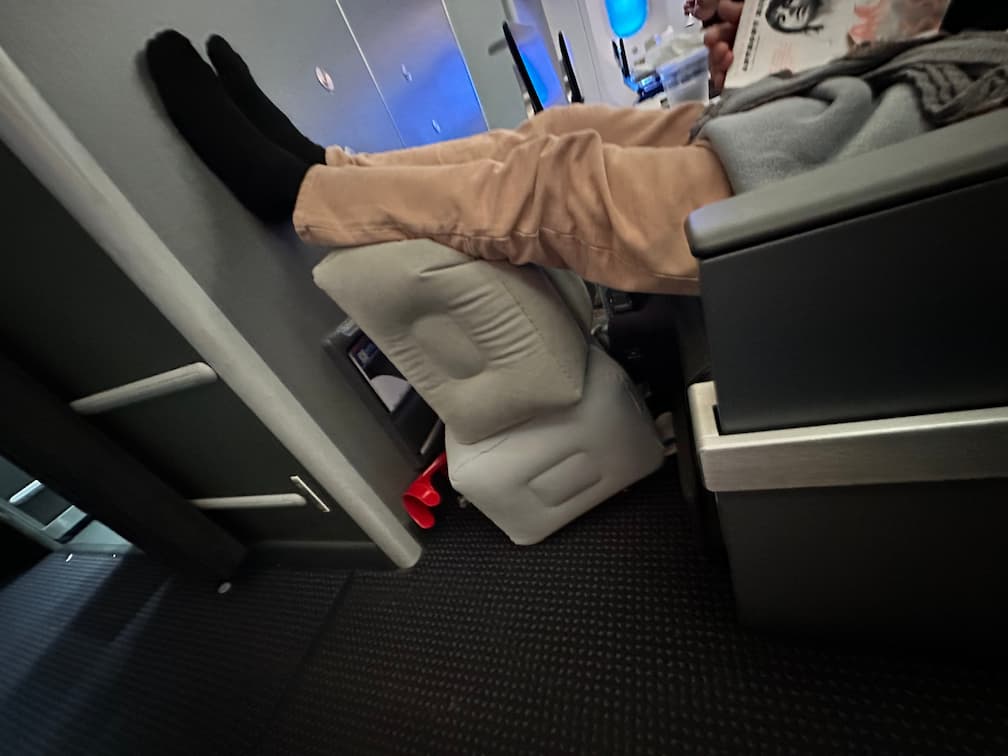
The real challenge starts when you leave your sofa. On long flights, keeping a surgical knee down in a cramped seat is a recipe for a flare-up. I used inflatable travel pillows designed for footwells to turn an economy seat into a makeshift recliner. It made a real difference for swelling during international travel.
If you want more practical gear ideas like this, I keep everything in Tips, and I share how these decisions fit into my day by day recovery on the Timeline.
The Pillow Stack
Using what you already have at home to get the job done.
- ✅ Zero cost if you have extra pillows.
- ✅ Adjustable height and softness.
- ❌ Pillows shift and lose shape overnight.
- ❌ Can lead to heel pressure if not padded correctly.
Wedge Elevation Pillow
A dedicated foam ramp designed for post-op swelling control.
- ✅ Stable angle that supports drainage and reduces swelling.
- ✅ Memory foam can reduce heel discomfort over long sessions.
- ✅ One piece, no sliding or rearranging required.
- 💡 Tip: Look for one with a washable cover.
Elevation Pillow After ACL Surgery
Quick answers to the questions I kept Googling during recovery, especially when swelling was ruining my sleep or travel. Not medical advice, always follow your surgeon and physio.
Does elevating the leg really reduce swelling after ACL surgery?
+
How high should my leg be elevated to reduce knee swelling?
+
Is an elevation wedge pillow worth it compared to stacking pillows?
+
Should I put a pillow directly under my knee after meniscus surgery?
+
How do you elevate your leg on a plane after ACL surgery?
+
How long should I elevate my leg each day after ACL surgery?
+
Why does my heel hurt when I elevate my leg?
+
Does elevation help with knee pain or only swelling?
+
Elevation Pro-Tips
Above the Heart
For elevation to actually work against swelling, your knee must be higher than your heart. If you are just propping it up on a footstool while sitting upright, you are not getting the full benefit of gravity.
Avoid the "Knee Fold"
Never put a small pillow directly under the knee joint. This keeps the knee bent and can lead to stiffness. Support the entire leg from the calf down to the heel to keep the joint neutral.
Deflate for Portability
If you are traveling, an inflatable wedge is your best friend. It takes up almost no space in your bag but provides instant relief in hotel rooms or airplanes where extra pillows are scarce.
Heel Freedom
If you use the stack method, make sure your heel is softly padded and not crushed into one spot for hours. Constant heel pressure while elevated can become surprisingly painful.