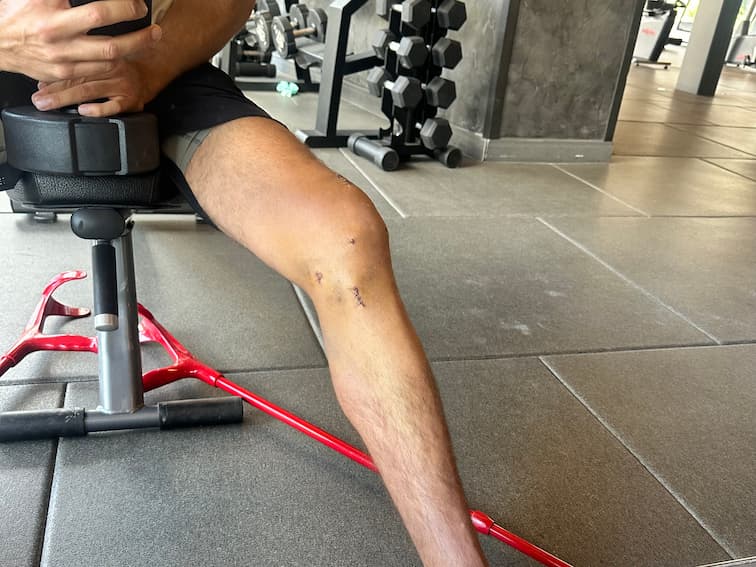
Woke up in the morning feeling great.
That’s new. It honestly felt like there might be a light at the end of the tunnel.
I did my morning exercises, sent the kids to school, and then made a decision: I’m going to the gym.
Walking into the gym on crutches is a strange experience. Everyone looks at you. Some with pity. Some like you are a bit crazy. And some with a quiet kind of respect. You can almost hear the thoughts.
Look at this guy. In pain. On crutches. Still showing up.
And that’s the point.
You can’t just stop and whine. You have to get up and move.
The gym is great, even if legs are off-limits and everything else is limited. Training upper body still sends a signal to the body: muscles matter. Work them. Keep them. And in the long run, that helps protect against muscle loss elsewhere, including the legs. I chatted with a few people there. Neighbours. Familiar faces. They threw some encouraging words my way. It helped. I trained chest and triceps. It felt amazing to exercise again - hard, awkward, limited, but real. One important lesson: don’t be shy about asking for help. People are happy to bring weights, move plates, adjust benches.
After the gym, I did a few work calls and iced the knee.
Later, I went to my first event since surgery. Jeans on, ready to socialize.
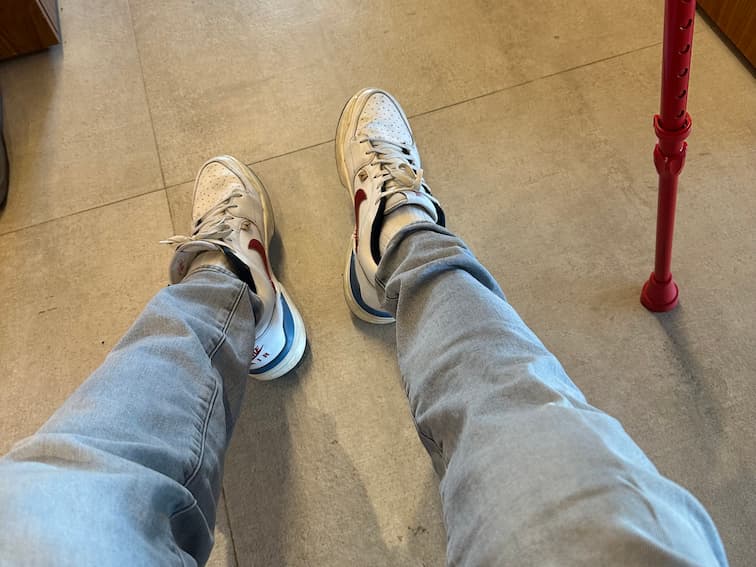
Me ready to go out to the world.
Wow.
That’s when you really feel disabled.
Getting in and out of a taxi. Registering. Climbing stairs. Standing with a plate of food. Navigating a buffet. Talking to potential clients and partners. Being social. All simple things, normally automatic, suddenly require real effort and concentration.
I stayed for about four hours. When I got home, I was completely exhausted.
My activity stats looked like I’d run a marathon.
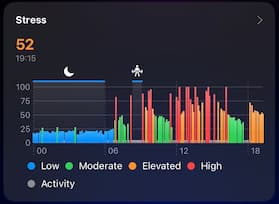
Stats from my watch.
Turns out, crutches are one hell of a workout.
Today felt like progress, but also a reminder:
Coming back to life is work too.
Key Takeaways
- Energy can return suddenly and feel like a breakthrough
- Re-entering normal environments exposes new physical challenges
- Showing up, even limited, builds confidence and momentum
- Upper-body training supports overall recovery and muscle preservation
- Asking for help is necessary and usually welcomed
- Social interactions are far more demanding than expected
- Crutches significantly increase physical workload
- Fatigue is the hidden cost of “normal” activities
- Progress and exhaustion can coexist
- Coming back to life requires real effort, not just healing